
Introduced in 2024, Arena Media Manager (AMM) is a software-hardware system designed to coordinate media content, graphics, audio, and show scenarios across a network of media surfaces located inside and outside the venue. Based on user feedback and our own experience, SLOMO.TV team is steadily improving AMM in the last 2 years.
AMM's main technical features
AMM generates all graphical overlays, subtitles, animations and integrated information in real time, eliminating latency inherent to playing back pre-produced clips. This ensures that data shown on screens is always up to date, with near-instant responsiveness to changing game info or external data feeds.
The system supports multiple concurrent and independent playlists that can be dynamically adapted based on timing markings of the game, external triggers (e.g., goal detection, timeout signals from scoreboard controllers), or live data streams (weather updates, parallel match results).
Optimization features
AMM's user interface is designed for easy and intuitive control: a single operator can manage complex interactive shows for a large venue across hundreds of screens without requiring a large technical crew.
To simplify the work of content-makers, AMM provides a unified panoramic view of LED perimeters and multi-segment displays, removing the need to manually slice media content into individual fragments. This significantly reduces pre-production time and minimizes alignment errors.
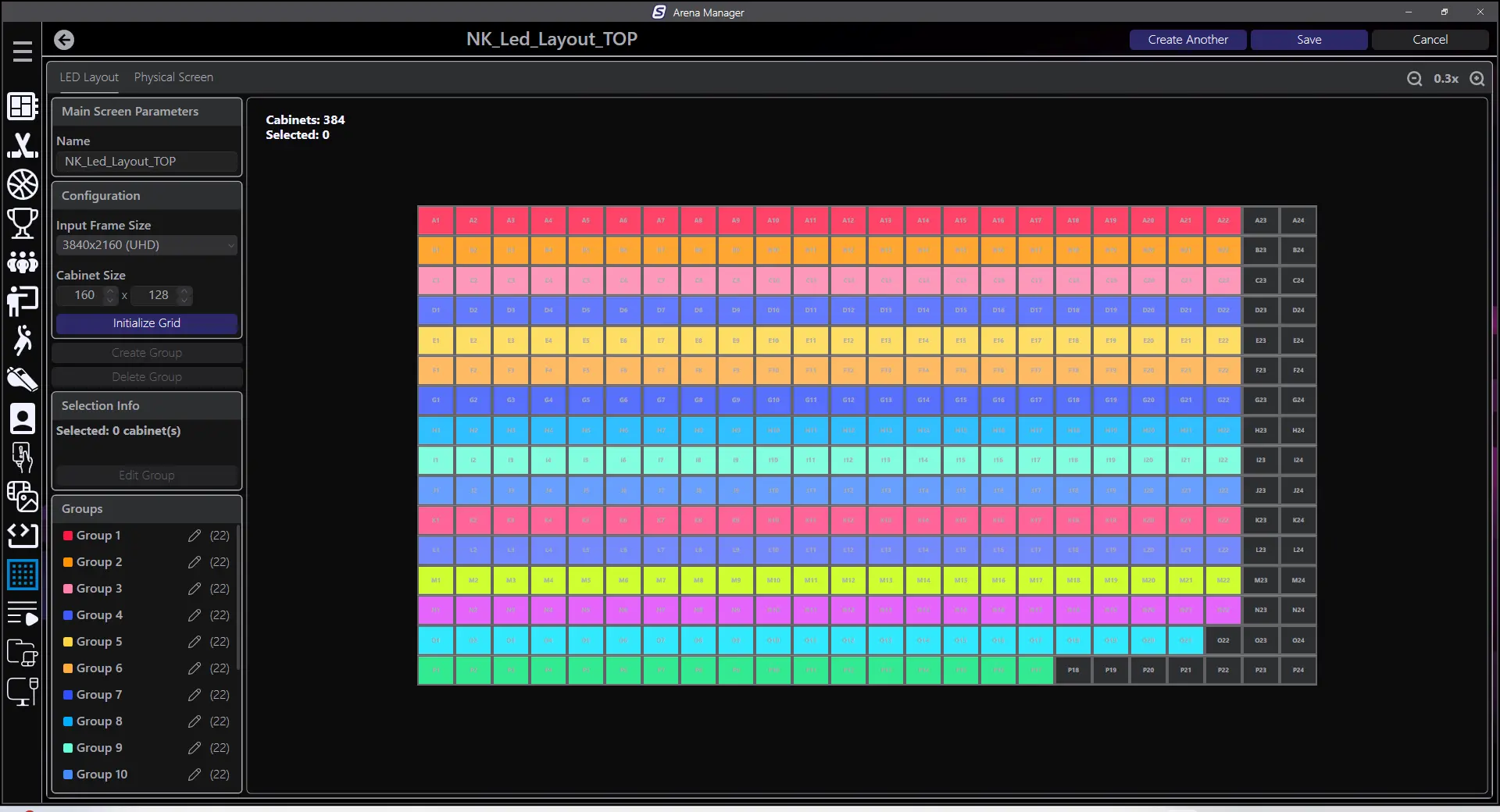
The system also implements audio delay management to maintain synchronization and temporal alignment across the complex acoustics of a stadium.
Smart Media Surface concept
SLOMO.TV's philosophy is to approach familiar products, processes, and technologies from a practical angle. This mindset gave rise to our latest concept – Smart Media Surface (SMS).
SMS redefines the role of individual screens within a venue by treating every media display as an intelligent node in a unified media network. This approach is the result of the extensive theoretical and practical experience we've gained while working as a technology provider at sports arenas and event venues.
The origins of this approach trace back to SLOMO.TV's early work in the 2000s on media systems, when our team was deploying large-scale interactive media set designs for live theater performances. These projects featured real-time, per-device playlist control and seamless 3D mapping on curved surfaces – a foundation that directly contributed to the development of SMS.
Main principles
- Regulatory screens as assets
Screens mandated by event and sports regulations (e.g., shot clocks, break timers) are not to be seen as passive. They can be repurposed: fulfilling mandatory data display requirements while using idle time for advertising or showing important venue information. - "Long tail" monetization
Revenue generation beyond peak event hours can be a valuable source of additional income. Low-priority or auxiliary screens can run localized ad campaigns, sponsorship messages, or community content during non-peak periods to maximize the utility of the available media surfaces. - Centralized logic with local autonomy
SMS nodes receive commands from the central host, but retain full local autonomy when disconnected or in emergency mode. Each screen follows an internal schedule and priority rules, automatically selecting appropriate content (clock, emergency message, default loop) based on its location and current status. Even if the central control host is compromised, individual surfaces continue to operate safely and effectively, preserving critical functions like timekeeping, alerts, and basic venue information. - Safety systems integration
In crisis situations, the system instantly overrides regular content with emergency notifications. Messages provide clear directional guidance and crowd management instructions tailored to each screen’s physical location.
AMM & SMS synergy
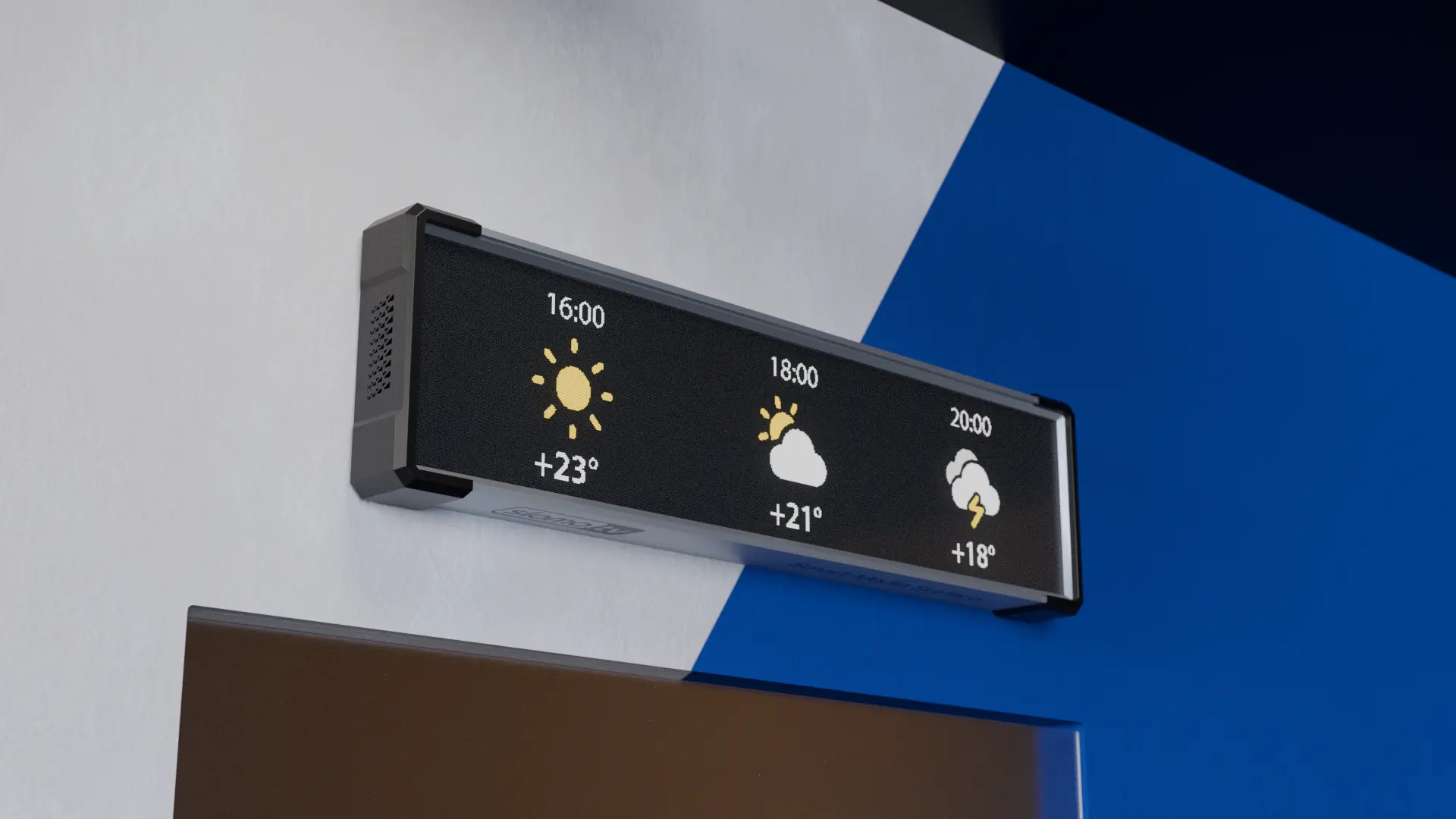
Together, Arena Media Manager and Smart Media Surface form a unified media environment where AMM acts as the "brain", a control host defining content logic and timing in real time, while SMS serves as the "muscle" executing these instructions across diverse hardware – from large LED facades to tiny displays like timers and call boards.
The architecture supports heterogeneous hardware ecosystems, allowing venues to integrate new display technologies or expand coverage without overhauling the entire control infrastructure. The result is a resilient, adaptive infrastructure that supports operations, safety, and monetization across the entire venue.
AMM & SMS synergy represents a scalable model for building future-proof media infrastructures in large public venues, balancing central management with local autonomy and maximizing the utility of every media screen across the facility.