
The global shift to 4K resolution is transforming television and sports broadcasting. As demand for high-quality content grows, broadcasters seek cost-effective solutions that deliver top performance without requiring massive infrastructure. Ideally, the new systems should be integrated into existing workflows as painlessly as possible.
With a resolution of 3840×2160 pixels, 4K/UHD broadcasts deliver four times more detail than Full HD, delivering a picture that looks incredibly sharp and lifelike. The image in 4K is so vivid and engaging in 4K that it makes the viewers feel as though they are attending the captured event in person – which is particularly valuable in major sports events or live concerts. And for filmmakers and producers, 4K offers more freedom in editing: you can reframe shots or zoom in without worrying about losing quality.

Challenges of 4K broadcasting
One of the challenges that 4K broadcasting brings is managing the high data loads required for multiple recording, search, and playback channels. Traditionally, increasing channel capacity meant working with larger, more expensive server systems, and having to create more supporting infrastructure.
It's no secret that the lack of sufficient processing capacity for 4K often forces broadcasters to adopt a workflow, where the 4K signal from cameras is converted to 3G-SDI and recorded at 1920×1080 (50p/60p). Playback follows the same format, and the footage is later upscaled to UHD. Some replay server manufacturers offer this workflow as a built-in feature of their systems.
The new U2SI option
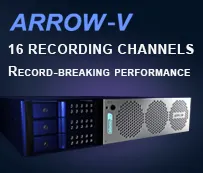
To address the issue, SLOMO.TV offers a new based on new I-Frame codec software U2SI option for 4K servers that boosts recording channel capacity in replay mode for some of the 4K replay servers (e.g., Arrow 4K / Fulcrum AT/12G) by 50%.
It is designed mainly for compact servers like Arrow 4K and Arrow 2110, increasing the number of channels without changing the hardware. Before the upgrade, these compact servers offer 4-4-2 channel setup in Replay Mode. With the new software activated, performance jumps up to a 6-6-2 channel configuration.
Before U2SI: 4 Rec/4 Search/2 Play
With U2SI: 6 Rec /6 Search/2 Play
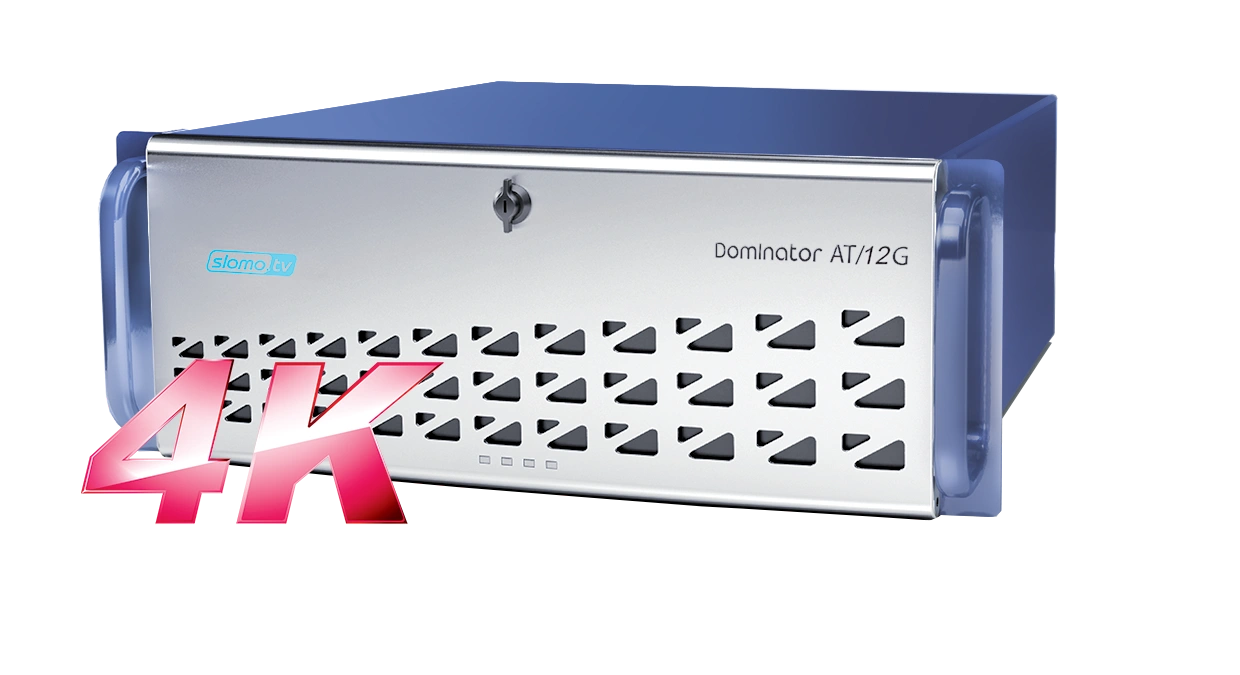
Beyond the Arrow series, the new channel capacity boosting option also enhances larger SLOMO.TV systems by 2 recording channels. The powerful top-level Dominator AT/12G, for example, can be upgraded from its standard Replay Mode setup of 6 Rec + 6 Search + 2 Play configuration to an even more capable 8+8+2 setup, unlocking additional channels for high-intensity live productions.
U2SI as a cost-effective gateway to 4K production
The U2SI upgrade transforms compact servers into top high-performance units, reaching the level of larger systems. For small and medium studios, this opens a practical way to enter and compete in the demanding 4K sports and event broadcasting space.
Additionally, the increased channel capacity unlocks new possibilities for broadcasters. For example, production teams can now:
Use high-speed cameras more effectively, which can be crucial for capturing dramatic slow-motion replays in sports broadcasting. The upgraded 6-channel capacity supports configurations like two 3x speed cameras or three 2x cameras.
Streamline live production: with more search channels, operators can quickly locate and replay key moments during live events, enhancing viewer engagement.
Optimize mobile setups: servers with the new software option fit perfectly into budget OB vans, enabling high-quality 4K slow-motion replays even in smaller productions, which makes creating top-level content more accessible.
Improve post-production: the ability to record more channels simultaneously provides greater flexibility for editing, allowing creative teams more flexibility and access to richer footage.
The future of 4K
SLOMO.TV continuously aims to lower entry barriers to professional 4K/UHD production, making top-tier capabilities accessible to a wider range of users – showing that the value of compact, software-optimized 4K servers extends beyond the technical benefits.
In our opinion, the rise of more compact 4K servers and options like U2SI marks a shift in broadcast infrastructure strategy that is now moving towards intelligent, software-defined optimization. Content demands grow quickly, with higher resolutions, more cameras and real-time analytics. The physical footprint and power consumption of traditional servers becomes unsustainable. Compact 4K solutions like SLOMO.TV's Arrow series and Simple R 4K prove that performance can be separated from size.
The shift also changes what "future-proofing" means in broadcasting. Traditionally, it meant buying the largest system possible to accommodate future needs. Today, it means investing in solutions that can adapt to new paradigms (like ST 2110 or eventual 8K support) without significant hardware replacement.