
VAR solutions for football
Video Assistant Referee (VAR) technology is a multi-channel recording and instant replay system that helps football match officials make accurate decisions on controversial game moments.
The VAR system is operated by the VAR team, which consists of the match officials – VARs (Video Assistant Referees) and AVARs (Assistant Video Assistant Referees) – and the ROs (Replay Operators).
The VAR team monitors the game remotely on multiple screens and has real-time access to video footage of the game to assist the main referee on the field with instant replays of key moments from different camera angles.
According to the VAR protocol, the VAR team may only assist the main referee in the event of a "clear and obvious error" or a "serious missed incident" related to:
- Goal/no goal;
- Penalty/no penalty;
- Direct red card (not second yellow card);
- Mistaken identity.
As a pioneer of VAR technology, SLOMO.TV has been involved in the development of video assisted refereeing with IFAB and FIFA from the very beginning (videoReferee® at FIFA's video replay experiments workshop).
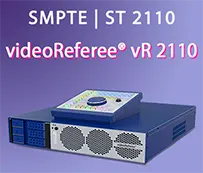
videoReferee® VAR systems from SLOMO.TV provide easy and cost-effective VAR implementation solutions for football.
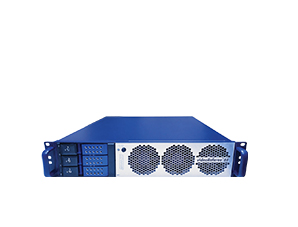
| videoReferee®-8F |
|---|
| Control-VR control panel included |
| Up to 8 recording channels |
| VAR+AVAR+RO workplaces |
| Additional independent workplace (AVAR2 or RO2) |
| Integration with VOL |
| Integration with Referee Intercom |
| Support for SSM cameras |
| 2U, 12 kg |
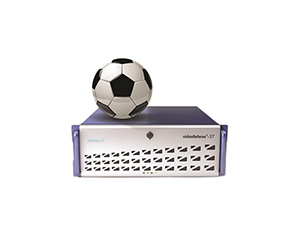
| videoReferee®-ST |
|---|
| Control-VR control panel included |
| Up to 16 recording channels |
| VAR+AVAR+RO workplaces |
| Additional independent workplace (AVAR2 or RO2) |
| Integration with VOL |
| Integration with Referee Intercom |
| Support for SSM cameras |
| 4U, 19,5 kg |
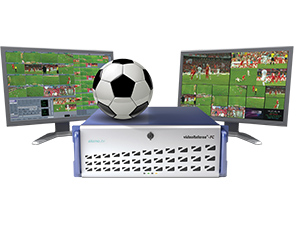
| videoReferee®-FC |
|---|
| Control-VR control panel included |
| Up to 32 recording channels |
| VAR+AVAR+RO workplaces |
| 3 additional independent workplaces (AVARs + ROs) |
| Integration with VOL |
| Integration with Referee Intercom |
| Support for SSM cameras |
| 4U, 19,5 kg |
General advantages:
- SLOMO.TV provides support at every stage of the VAR implementation;
- videoReferee® VAR systems are FIFA certified and can be used at any level of football competition;
- videoReferee® is the most affordable system among certified VAR solutions;
- Wide range of VAR systems (from entry-level 8-camera systems to large-scale 32-camera VAR solutions) with different installation options (local usage, mobile system, VAR center);
- All videoReferee® systems include a permanent software license;
- Unique Academy technology for intensive training of VARs/AVARs/ROs.
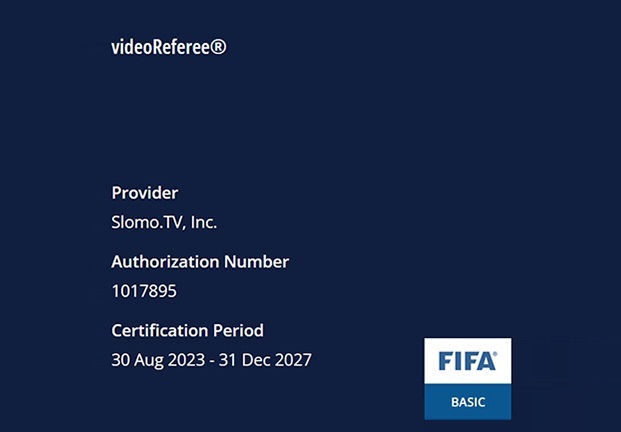
Certified VAR technology videoReferee®
has been tested and certified
under
the global quality standard "FIFA QUALITY PROGRAMME for VAR technology".
Operational advantages:
- Very fast User Native Interface. Convenient search, easy camera selection, playback control and zoom. View of 1 – 4 cameras.
- Quick review and Loop playback. The video replay is ready for analysis within a few seconds.
- Camera synchronization. Server synchronizes out-of-sync cameras for accurate review.
- Control panel and referee buttons. Specialized RGB backlit referee buttons plus a dedicated Control-VR panel with 35 multi-function RGB backlit buttons and reliable Jog/Shuttle.
- Optional support for additional independent VAR/AVAR/RO workplaces.
- Reporting and archiving of exported video footage at the end of the match.
VAR features:
-
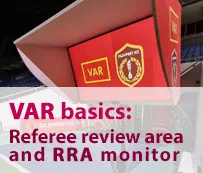
MIDO-RRA OPTION WITH VENUE INFORMATION GRAPHICS CAPABILITY
The system's RRA option duplicates on the RRA monitor the VAR interface with the review in progress. In the absence of a VAR interface, it displays a background picture. Additionally, it generates graphics with the referee's decisions for the Venue Information Graphics systems. -
VIRTUAL OFFSIDE LINE
Seamless integration with 2D/3D Delta-offside (by Deltacast) VOL solutions:- 2D DELTA-OFFSIDE – Support for up to 3 cameras;
- 3D DELTA-OFFSIDE – Support for up to 10 cameras.
-
REFEREE INTERCOM
Integration with the most popular Referee Intercoms (e.g., Vokkero). Conversations between the VAR (or AVAR) and the head referee on the pitch are recorded on the server. -
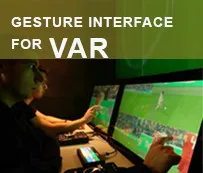
GESTURE-BASED INTERFACE
Full-featured gesture-based interface for VAR monitor and Multiviewer that allows users to operate the system using simple, intuitive gestures.
Local & Mobile usage
The server and control workplaces are located in a dedicated VOR room or in a specialized vehicle (VAR Van) at the stadium.
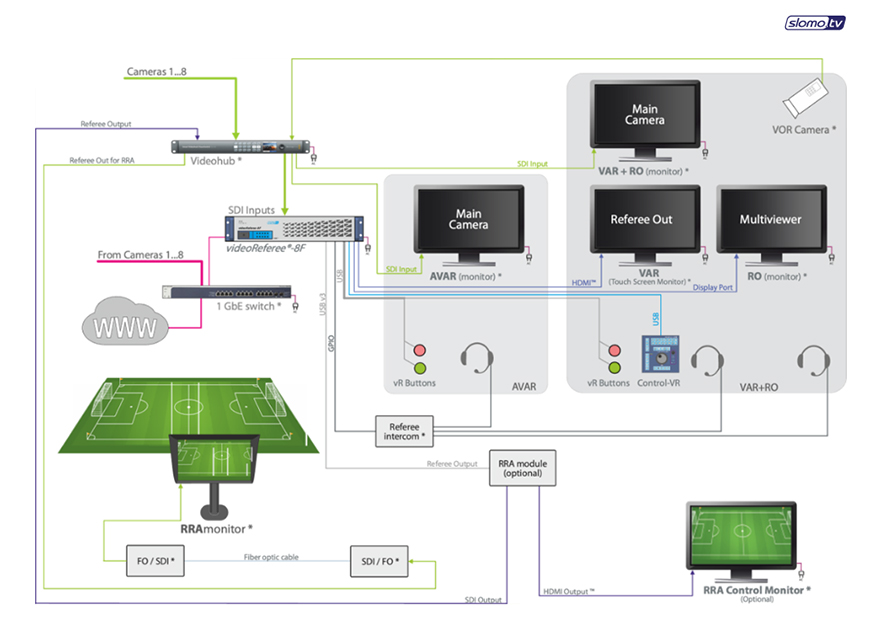
The referee's workplace has the Control-VR panel, 4 referee buttons and 4 monitors, displaying the Main camera, VAR interface, Multiviewer.
The VAR interface supports the following modes:
- Delayed main camera;
- 1-4 cameras multiscreen;
- Frame-by-frame search;
- Playback at a variable speed.
videoReferee® case studies
Kazakhstan Football Federation

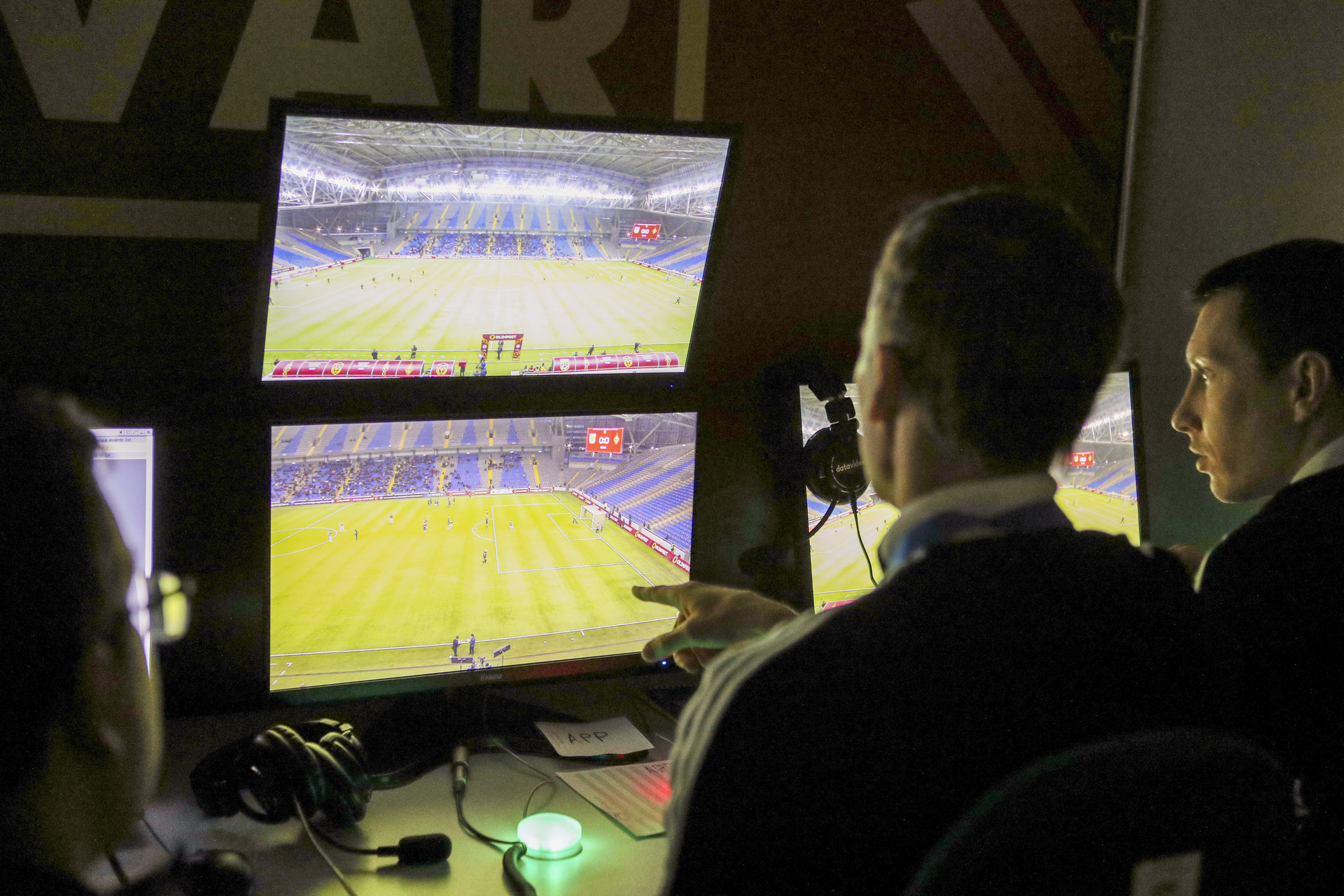
The successful testing of the videoReferee® system in July 2021 led to FIFA's approval of the use of SLOMO.TV VAR technology in regular football competitions in Kazakhstan.
In total, the Kazakhstan Football Federation uses 14 VAR complexes: videoReferee®-8F servers and mini-II-vR-Cam cameras.
Georgian Football Federation

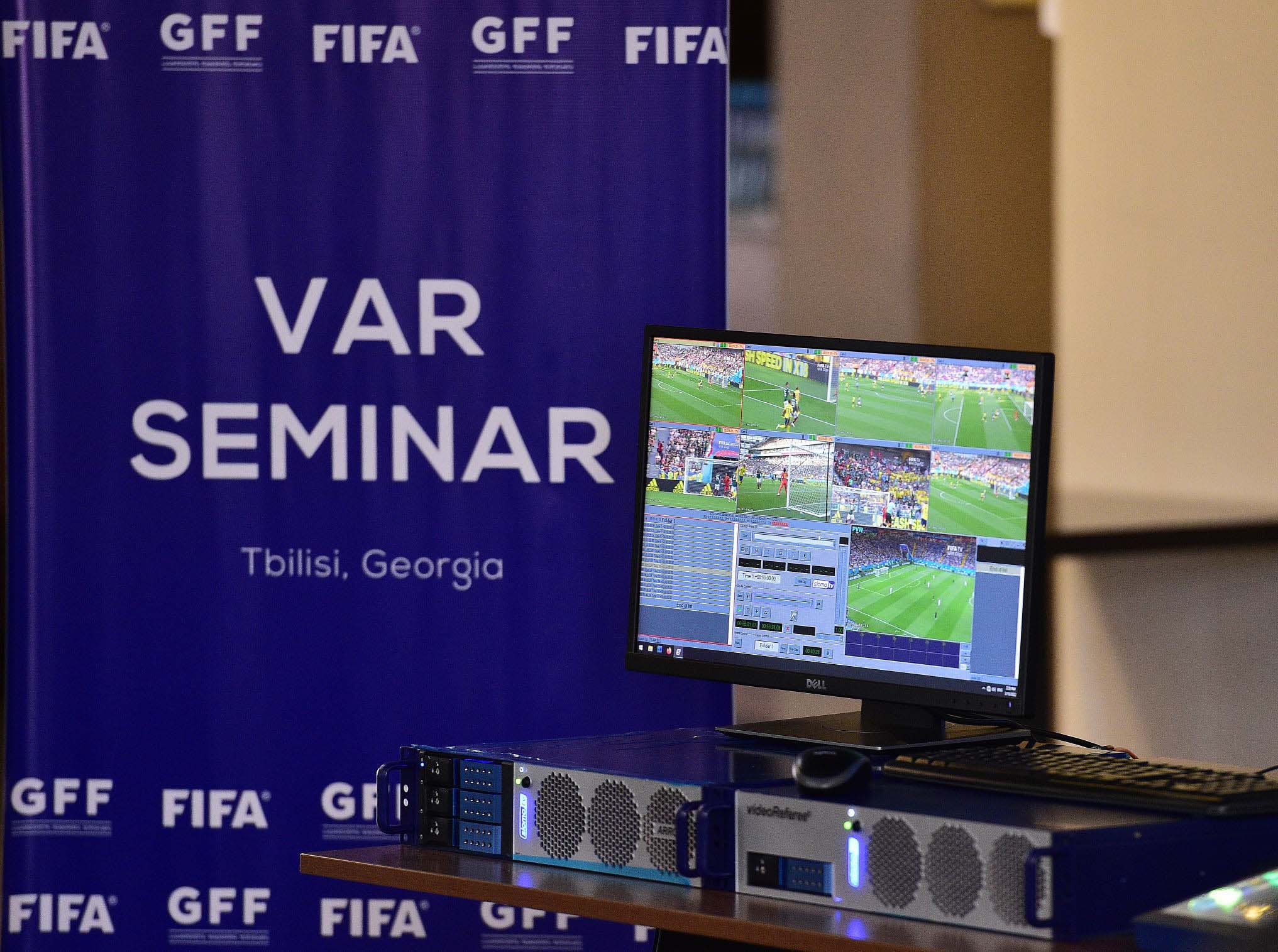
The Georgian Football Federation uses SLOMO.TV VAR technology: videoReferee®-based VAR Van. In March 2022, an intensive training session for future video match officials was held in Tbilisi with SLOMO.TV technicians and FIFA instructor. The training was carried out on the videoReferee® system and SLOMO.TV Academy simulator.
The Federation has received FIFA's approval for the use of the VAR in official matches. In 2023, the GFF expanded their systems by 2 more SLOMO.TV VAR Vans.
Tajikistan Football Federation

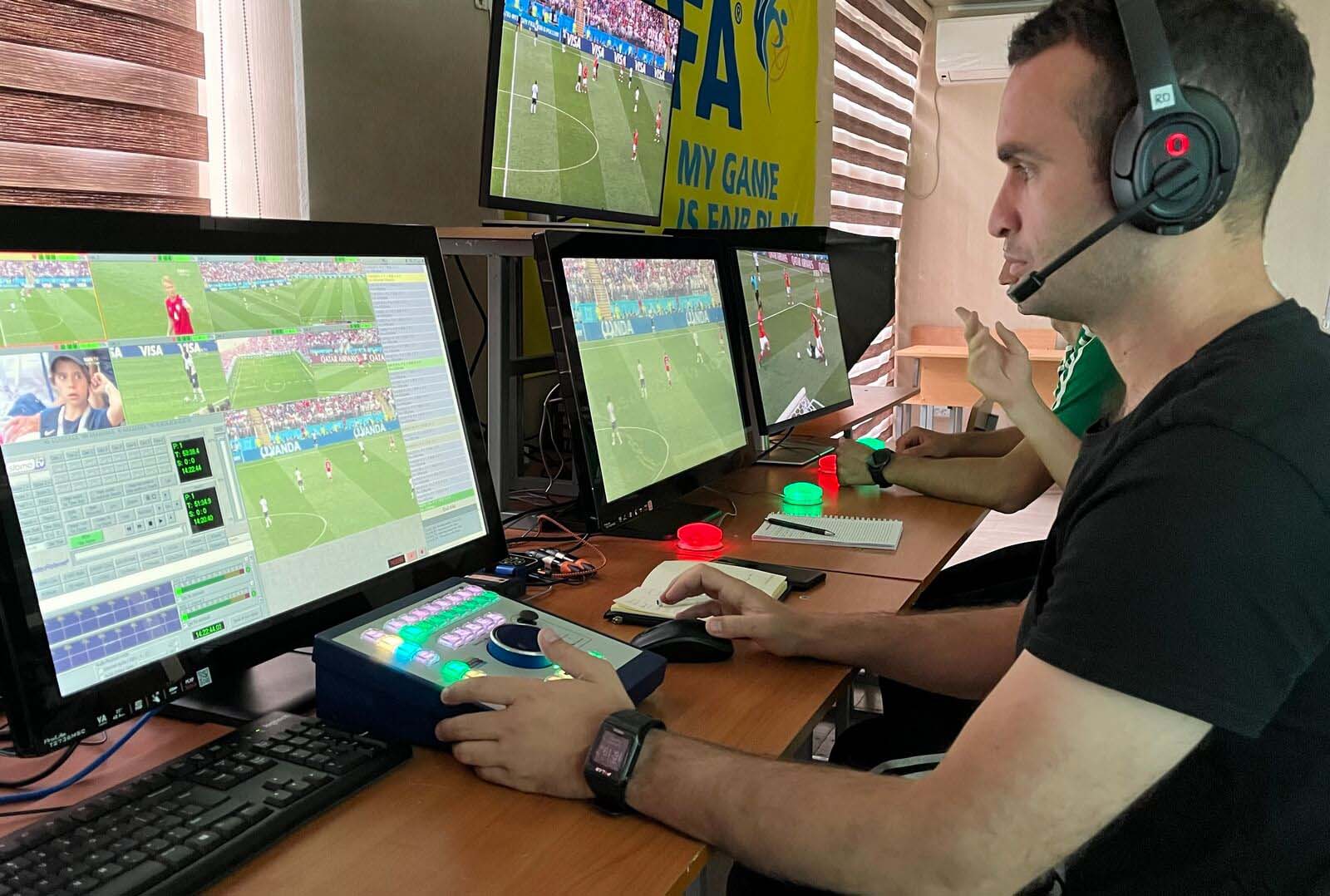
The Tajikistan Football Federation has selected videoReferee® VAR technology as the option that met all their requirements and objectives. An intensive training for VMOs was conducted in Dushanbe using the Academy and videoReferee®-8F, which was then used to equip the VAR van.
The VAR implementation project was successfully completed in the fall of 2023 and the technology is now officially used in Tajikistan Higher League matches.


VOL (Virtual Offside Line)
VOL (Virtual Offside Line) is a system designed to accurately assist football referees in offside situations. As an integral part of the VAR (Video Assistant Referee) ecosystem, VOL system by SLOMO.TV combines advanced 3D calibration techniques, video synchronization, and human expertise to help make well informed decisions.
Basic principles
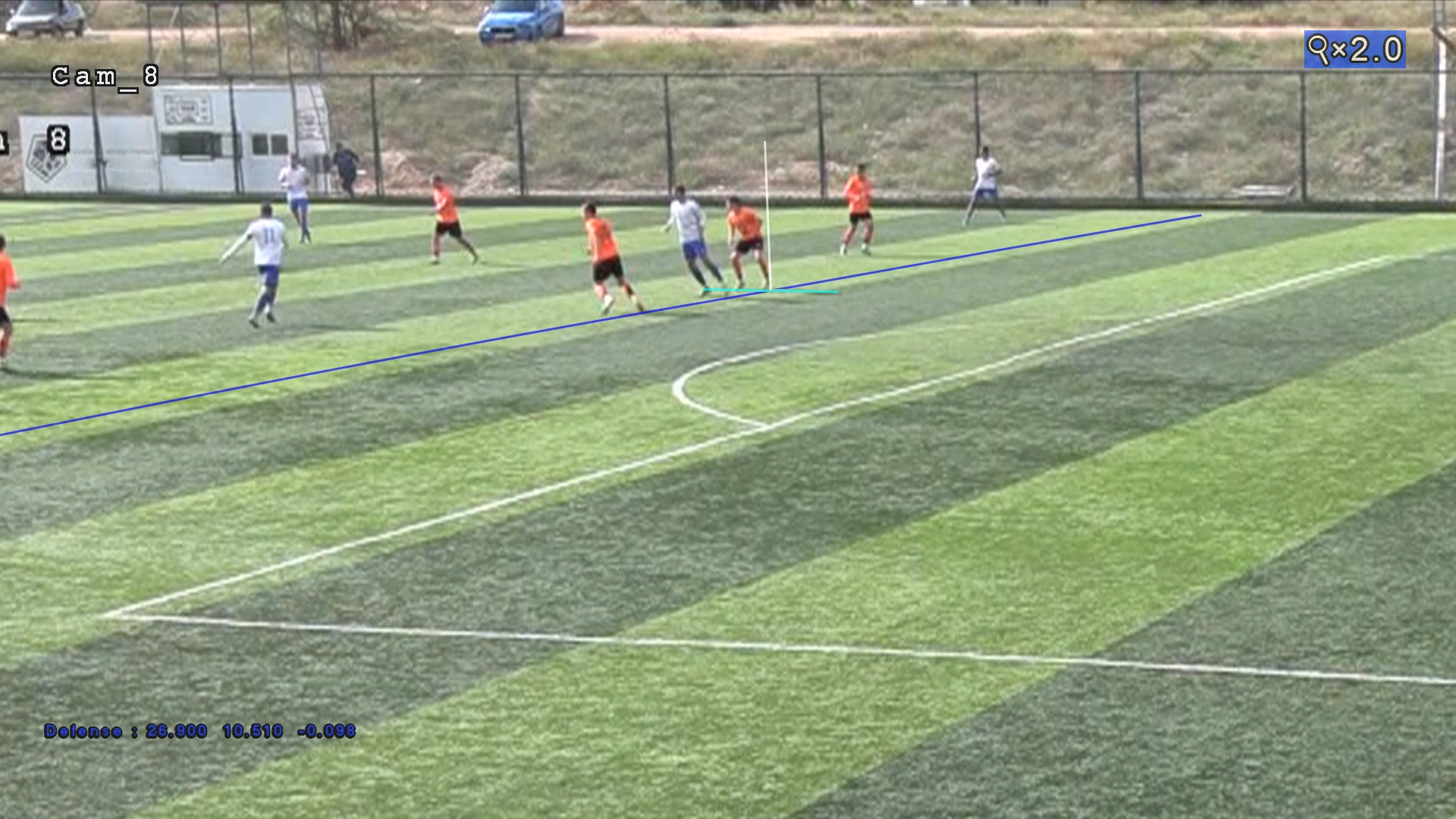
Unlike older 2D systems that were used to project lines onto the pitch plane, VOL technology is designed to solve a three-dimensional problem. It determines the position of key body points of the involved football players (legs, torso) at the moment of the pass in real 3D space.
Key stages of offside detection:
- Locking the moment of the pass: Specialized cameras determine the exact moment when the ball is touched by a player from the passing team.
- 3D-scene construction: The VOL system analyses the position of all players relative to the goal line, using data from synchronized cameras and considering the actual pitch topography (irregularities of the field).
- Position analysis: The position of the attacking player is compared with the position of the second to last defending player.
Difficulties of the VOL system operation process
To accurately detect offside in football, numerous factors related to the geometry and topology of the football pitch must be considered. In this article, we will examine the main challenges faced by Virtual Offside Line (VOL) systems.
The perfect football pitch
An ideal football pitch should comply with FIFA recommendations regarding dimensions, markings, and surface parameters, and should be perfectly flat.
However, deviations are allowed, which may affect the performance of the VOL system.
Deviations in line markings
Some football teams may adjust their line markings at the home pitch. Minor changes in line markings become a tactical tool for the home team and may affect the correct rendering of offside lines by the VOL system.
In our practice, we have also encountered situations where pitch markings were asymmetrical relative to the half-way line. This may lead to errors when drawing the offside lines. In reality the deviations may be 10–20 cm in either direction – a significant difference for offside decisions.
Moreover, we've met cases where the main pitch marking rectangle (touch lines and goal lines) forms a rhombus or trapezoid instead of a rectangle. With a pitch length of 100 m, the error may amount to about 0.1%. However, when the VOL system is expected to detect offside with 1 cm accuracy, this error becomes significant and affects decision making.
Topological features of the football pitch
A football pitch is a complex structure and is not always perfectly flat. The pitch’s drainage system ensures water flows towards the edges to prevent stagnation, resulting in bulges in the center and slopes at the edges.
For the VOL system to operate correctly, three-dimensional pitch parameters must be considered. Any irregularities complicate the drawing of a straight line due to potential distortions, which may affect the final offside detection.
VOL system and cameras
When the VOL system uses cameras positioned close to the pitch edge, errors may occur due to incorrect height determination in the model. For instance, if a camera is mounted 10 m from the pitch edge at human height, and players are at the opposite end of the pitch (up to 50 m away), the offside line drawing error may reach 50–100 cm if the VOL system does not account for local height differences.
It is also necessary to consider image distortion when drawing offside lines. Shooting with cameras of different focal lengths leads to distortions where straight lines appear curved. In the VOL system, wide angle shots require offside lines to be drawn curved accounting for this distortion.
Improving VOL system performance
When working with a regular, non-ideal football pitch, we face numerous complexities that must be considered. To correctly draw the offside line, pitch and line marking measurements are required, along with constructing a topological model of the entire pitch, including all three-dimensional irregularities. Additionally, it’s worth considering to use cameras that reduce the likelihood of VOL system errors.
Creating a model of the pitch
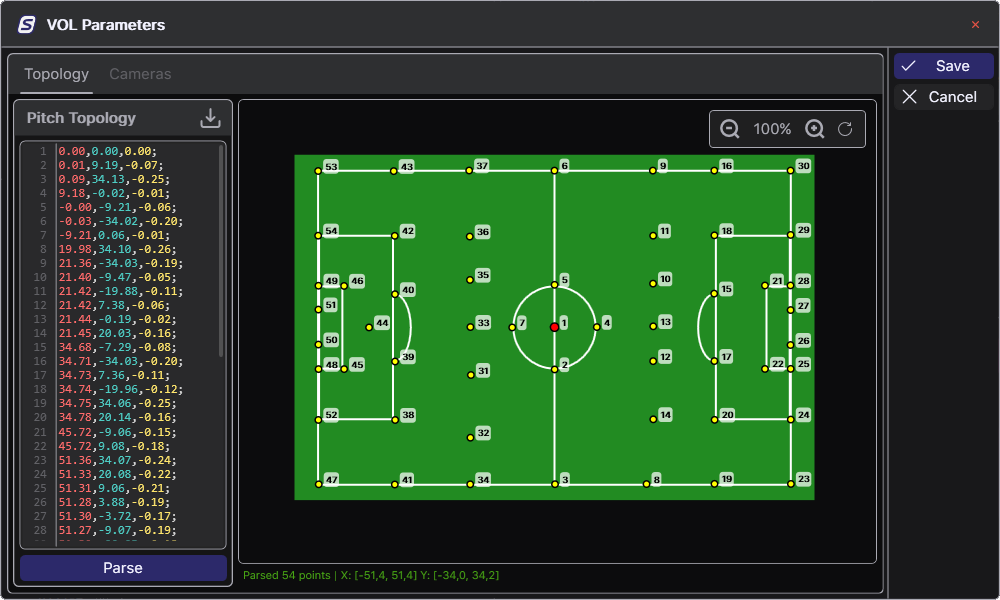
Let's consider a regular football pitch with known topological coordinates for standard points (31–35 points) which are uploaded to the VOL system. If a disputed incident occurs near standard points within 1 m, the VOL system operates with high accuracy.
However, an incident may also occur at a considerable distance from known points. Given that depressions and bulges are distributed across the pitch, a more accurate three-dimensional topological pitch model must be created to ensure acceptable VOL system accuracy. This requires a grid with a larger number of points.
In our opinion, an acceptable grid for normal VOL system operation has a cell size of 2×2 m. The optimal grid has 1×1 m cells. This is a substantial pitch measurement task, but it enables accurate line drawing.
Of course, performing topology scans before each match is costly and impractical. For each pitch where matches may be held, a topological map must be created – a 3D object onto which the current actual pitch dimensions and line markings can be overlaid. This allows offside lines to be drawn as accurately as possible on a three-dimensional surface, as relative coordinates and necessary measurement heights will be known.
📄 Our guide to collecting field topology data for VOL technology
Optimizing cameras for offside detection
Another challenge is the need to capture potential offside incidents with a camera providing sufficient detail for the VOL system. When using broadcasting cameras, it may turn out that no suitable camera was available for offside detection in a specific situation.
This is addressed by installing fixed cameras that are always capable of capturing complex incidents. For example, the Premier League uses 30 cameras for precise fixed offside detection. They allow accurate determination of player positions in three-dimensional space.
Installing a large number of cameras requires substantial stadium equipment investment but guarantees high accuracy in offside detection and resolution of disputed incidents.
Our recommendations
For maximum efficiency within reasonable budgets, the following steps can be taken to improve VOL system accuracy:
- Perform topological pitch measurements twice: at the start of the season and in the mid-season. Also, perform pitch topology scans whenever pitch parameters change – e.g., when line markings are significantly altered or the turf is replaced. (📄 Instructions for collecting field data for using VOL technology).
- Whenever possible, conduct topological scanning of main pitch points (31–35 points) during line marking. Estimated task duration: 2 hours.
- Use special 16 m cameras positioned on each side of the pitch to capture the maximum number of disputed incidents.
- Ensure fixed cameras are synchronized with broadcasting cameras; otherwise, errors may reach up to 10 cm when capturing at 50i/50p.
- It is not enough to rely only on high-speed cameras (100-120 frames per second). Using four dedicated offside cameras and one overview camera can significantly reduce coordinate detection errors.
Main advantages of our VOL system
Our solution has the following technological and operational advantages:
🔗 Full integration with our VAR system
VOL is a software option running on the same hardware as our VAR system, not a separate server. This means:
- No need for additional hardware or control units
- Control is performed via the native VAR console (or mouse)
- It saves a lot of resources: takes no extra space, needs no extra purchases, and one operator can handle all functions
🎮 User controlled
The VOL operator has full control. Using an augmented reality tool (with a 3D crosshair) they can place markers on protruding body parts of players. This tool is displayed simultaneously on all selected cameras, allowing accurate positioning from different angles. This eliminates errors of relying on abstract player models
🌍 Consideration of the pitch topology
A football pitch is not a perfectly flat plane. The system requires mandatory pre-match calibration to create an accurate 3D model of the pitch, accounting for all depressions and mounds. This takes less than a minute per camera and ensures decisions are based on the stadium’s real geometry
⚡ Absolute camera synchronization
SLOMO.TV technology synchronizes all video streams with 0.5 frame accuracy, even for the initially unsynchronized cameras. This is imperative for reliably aligning the moment of the pass with the relative positions of the players
⏱️ High speed
Thanks to an intuitive interface and augmented reality technology, the operator spends up to 30 seconds on a standard incident and up to 60 seconds in complex cases, maintaining game pace
⚙️ Technical information
📐 Infrastructure recommendations
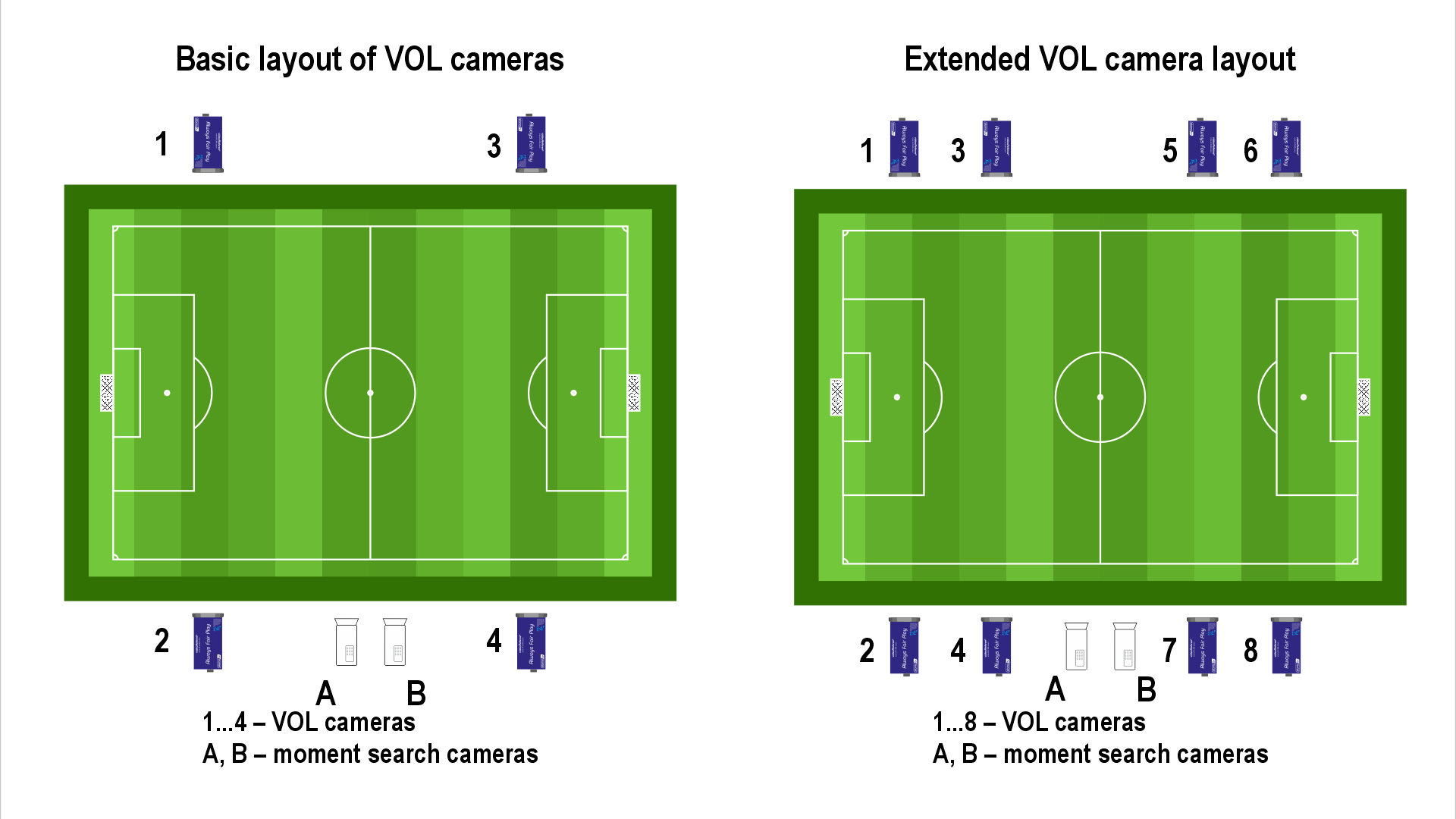
- Fixed cameras: We recommend using stationary offside cameras installed at 16 m from the goal line, perpendicular to the touch line. Four such cameras (two on each side) reliably capture up to 95% of incidents. Installing eight cameras is ideal
- SuperMotion cameras: To improve accuracy, using 100-120 fps cameras is recommended (for example, the mini-2x-vR-Cam). Standard 50 fps cameras have a margin of error of 4–20 cm. SuperMotion cameras halve this error, making it possible to evaluate disputed moments when the differences measure in centimeters
🧩 Hybrid VAR architecture
When using a VAR Center configuration as a VAR solution (a central hub equipped with the VAR system and VAR workstations), increasing the number of cameras requires expanding communication channels.
SLOMO.TV offers a hybrid approach, where the VAR server is installed at the arena directly, while the VAR workstations and the VAR team are located in a remote VAR Center. This way, adding 4, 8, or 16 cameras does not change the signal transmission requirements, as everything is handled locally.
🔌 Connectivity
SuperMotion cameras (such as mini-2x-vR-Cam) connect via a standard Ethernet network with PoE power supply. The cloud synchronization technology allows the system to be scaled to meet any requirement without loss of quality
VOL by SLOMO.TV is a fast, accurate, and reliable solution. Integrated into all VAR servers starting in 2026, it is available to all users of our systems as part of standard technical maintenance.