
- Details
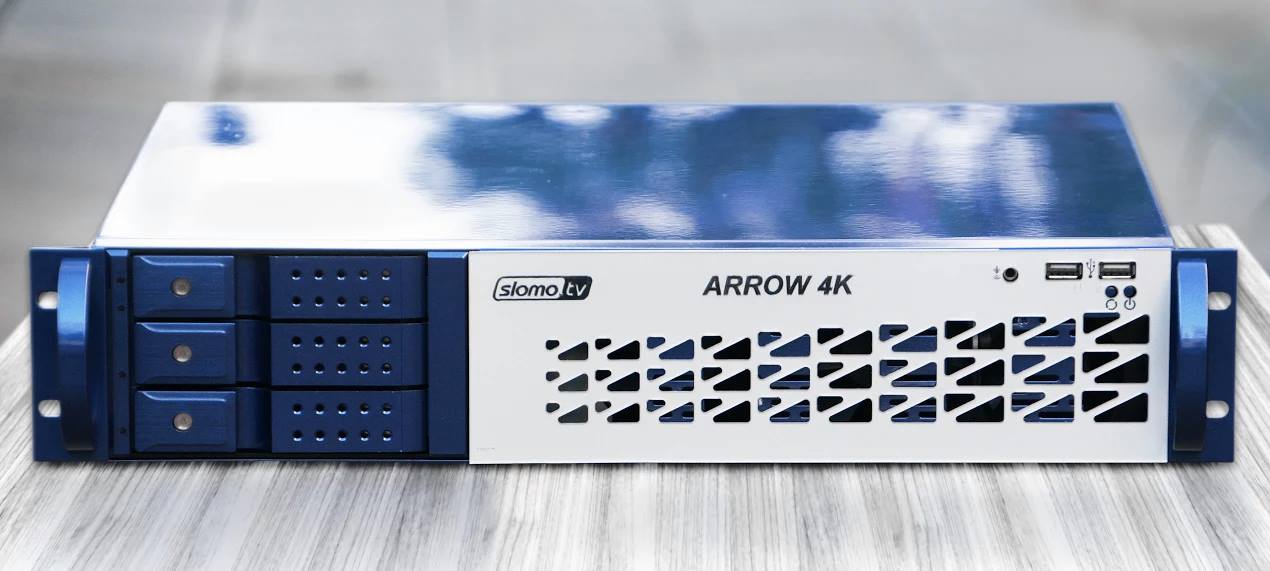
The ARROW 4K 111 is the most affordable 4K replay server in the world.
The entire family of Arrow servers is positioned as a budget solution.
Arrow 4K 111 is no exception. You get features for which competitors are asking at least 2 times more. The server allows simultaneous recording one 4K60P video input, replay 2 clipsl with transition effects and at the same time search and mark the recorded material. In recording for NLE mode the server writes 2 channels 4K60P. Unlike others we use full-frame 4K codec instead of 4 separate independent frames. Our codec provides 1200 Mbit stream, which is also the best in the industry. Export of recorded video for NLE is done in ProRes 422 and it does not require any additional hardware or license.
If this quality is not enough, then we can record two 4K60P channels without compression.
For 4K connections we use Quad 3G SDI.
Naturally, our server in replay mode works with HD, SD and 3G signals. (No additional licenses are required).
Working with 3G signals server provides simultaneous recording of 6 signals, playback of 2 channels with transition effects and search on all 6 channels simultaneously. The 4 graphics ports allow you to display on separate monitors the main interface, multiviewer and telestrator.
In addition this server can accommodate two independent operators each working with 3 channel and using their own remote control, main interface, multiviewer display and program output.
- Details
The workshop on video replay experiments was held in Amsterdam, the Netherlands, 18-20 May 2016
The International Football Association Board (IFAB) has invited tournament organizers interested in running experiments with Video Assistant Referee (VAR) to see the technology in action.
As an established and experienced VAR technology provider with over 70 installations in sports arenas around the world, SLOMO.TV participated in the IFAB tests with the videoReferee® 12-channel system that was used for the demonstration as a real working VAR system.
Please read the comments on the workshop from the IFAB and FIFA representatives below.
Lucas Brud,
Secretary of the IFAB:
The IFAB decided to allow experiments with video assistant referees in order to be able to answer one main question, and this is: "Will this support help the referees or not, and will it bring more fair play to the game?" Some theories may say "yes", but we really have to test live in order to be able to answer this question.
In the lead up to the decision, we have involved several football stakeholders, players, coaches, panels that advise us in football and in technical matters.
Also we have spoken to other sports such as NBA, NFL, cricket, rugby who have helped us establish the protocol for football. Even though it sounds like a different sport there are lots of parallels when it comes to video system referees (VAR).
The four match-changing decisions that IFAB has identified are: a goal or anything that leads to a goal, for example, foul play, a handball, or an offside situation; then a penalty, anything that might lead to a penalty kick, such as a foul, and, again, a handball [situation].
The referees may also review whether the foul or the handball happened outside or inside the penalty area.
And the third – a very important one – is direct red-card incidents.
We are not talking about a second yellow card, a direct red card, for example, for serious foul play or for violent conduct.
And the fourth more administrative decision is the award of a yellow card or a red card to the wrong player, we want to ensure that the players are not… that the right players are sanctioned.
Johannes Holzmüller,
FIFA Head of Football Technology Innovation:
As a member of the IFAB, FIFA was involved in the entire developing process from the beginning, and FIFA's football technology innovation department supports the IFAB with the management of the experiment and develops technological requirements to make sure that the video system referee receives the best view angles in the fastest possible time.
This project is similar to the goal-line technology because also in this project we are working with technology providers, we are working with research institutes in order to provide the IFAB for a final decision on video assistant refereeing (VAR) with all the facts and figures in order that they can make the right decision in the end.
Lucas Brud:
More than 25 associations and leagues have contacted us as they are interested in this discussion and want potentially to participate in the experiments. The IFAB will not decide which competitions will run the experiment, it would be rather the other way around. There would be requirements and protocols that the associations will have to fulfill in order to be able to participate in the experiments. We are currently conducting workshops after which we expect the associations, leagues, competition organizers to then confirm whether or not they want to participate, and once that is completed we will then start experimenting.
The expected decision to be taken earliest in 2018 or potentially even 2019 once the experiments are concluded and the analysis is available to the IFAB to take this important decision.
Check out the video from the workshop at the following link:
- Details
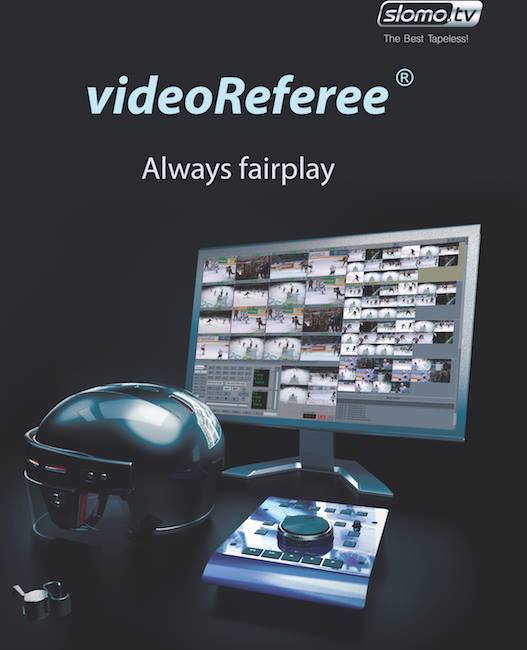
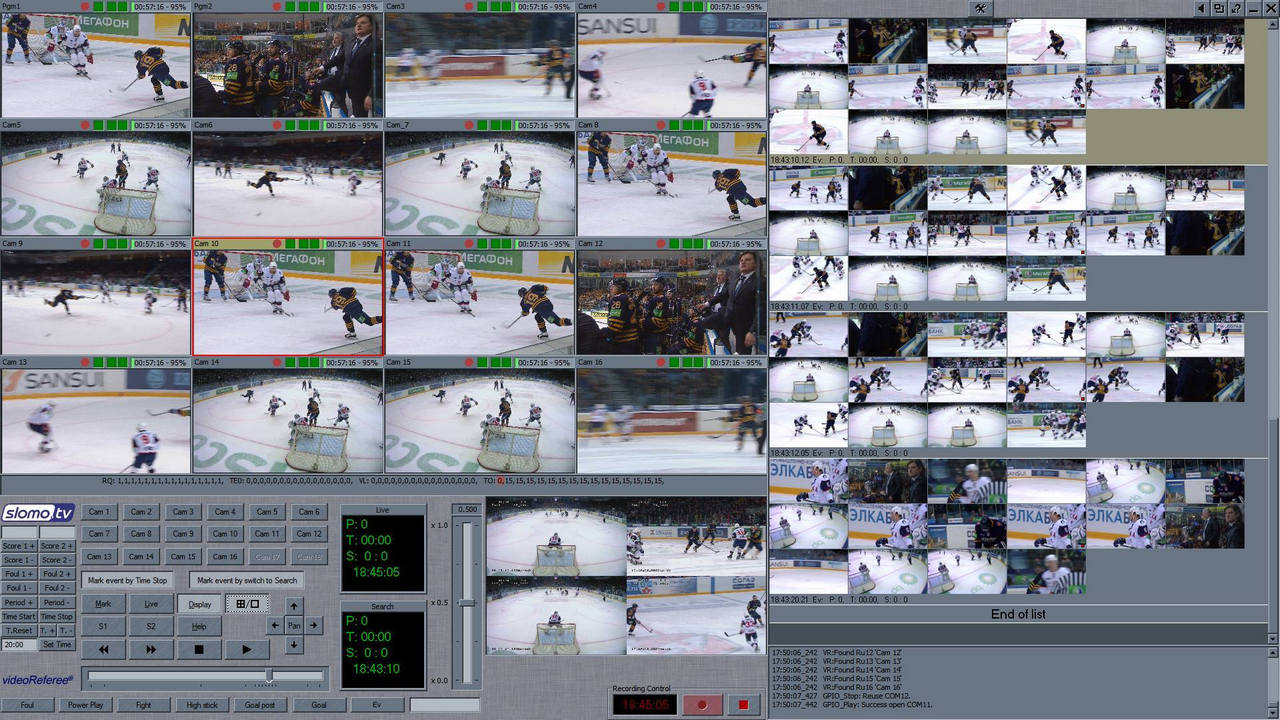
In 2007 at the World Ice Hockey Championship we debuted the world's first sports video judging system. All this time we were and still are the leaders in the field of video refereeing. We provide solutions for ice hockey, basketball, volleyball, football, rugby, soccer, short track speed skating, horse racing.
We are particularly pleased that due to videoReferee®, sport is becoming more transparent and honest.
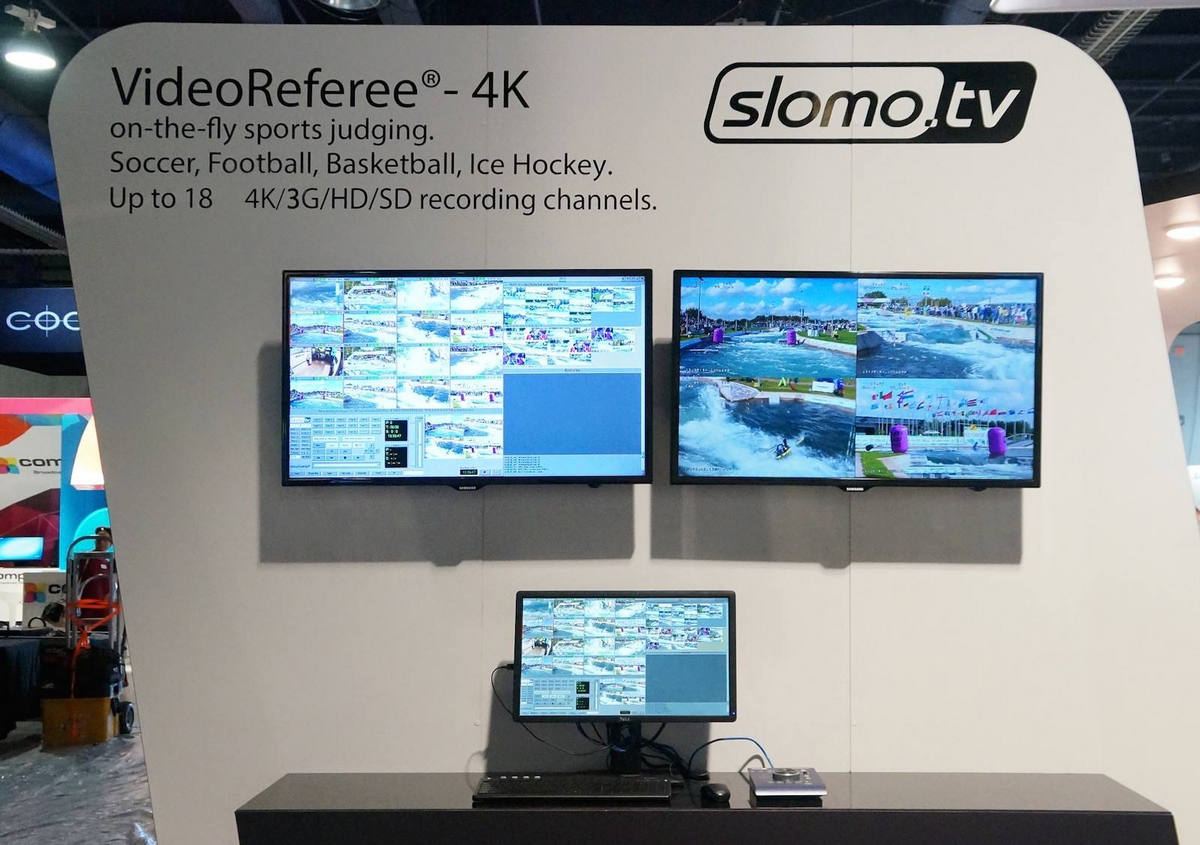
At NAB 2016 we showed our new videoReferee®-4 family. As always, the most powerful in the world. We now support up to 18 recording channels and simultaneous viewing of 4 recorded channels.
We pioneered support of 3G SDI signals and are the first in sports video judging working with 4K signals. Our system videoReferee®-4K works with 4K 12G video signals.
- Details
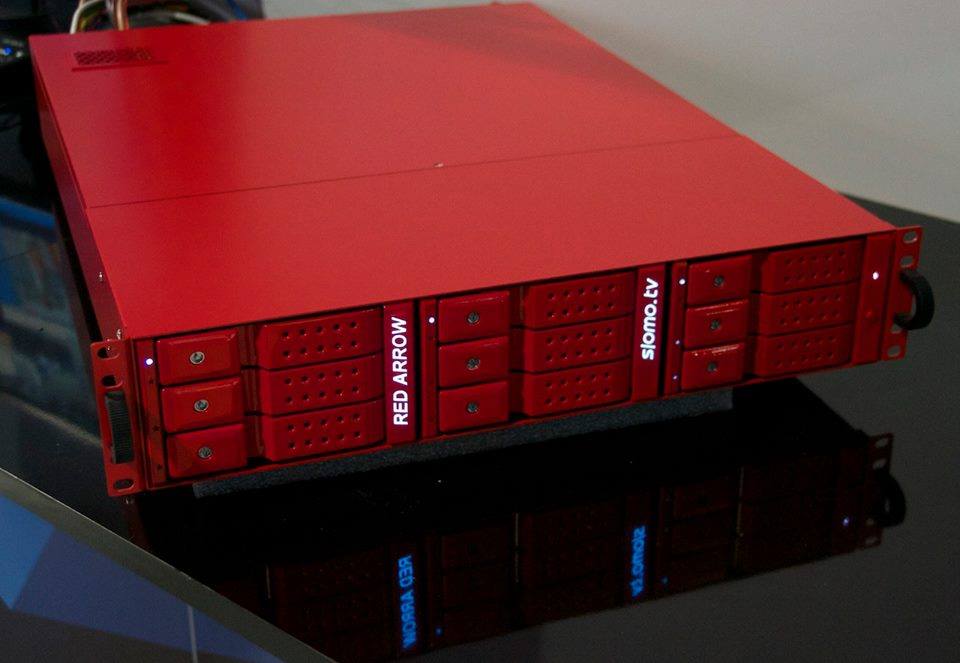
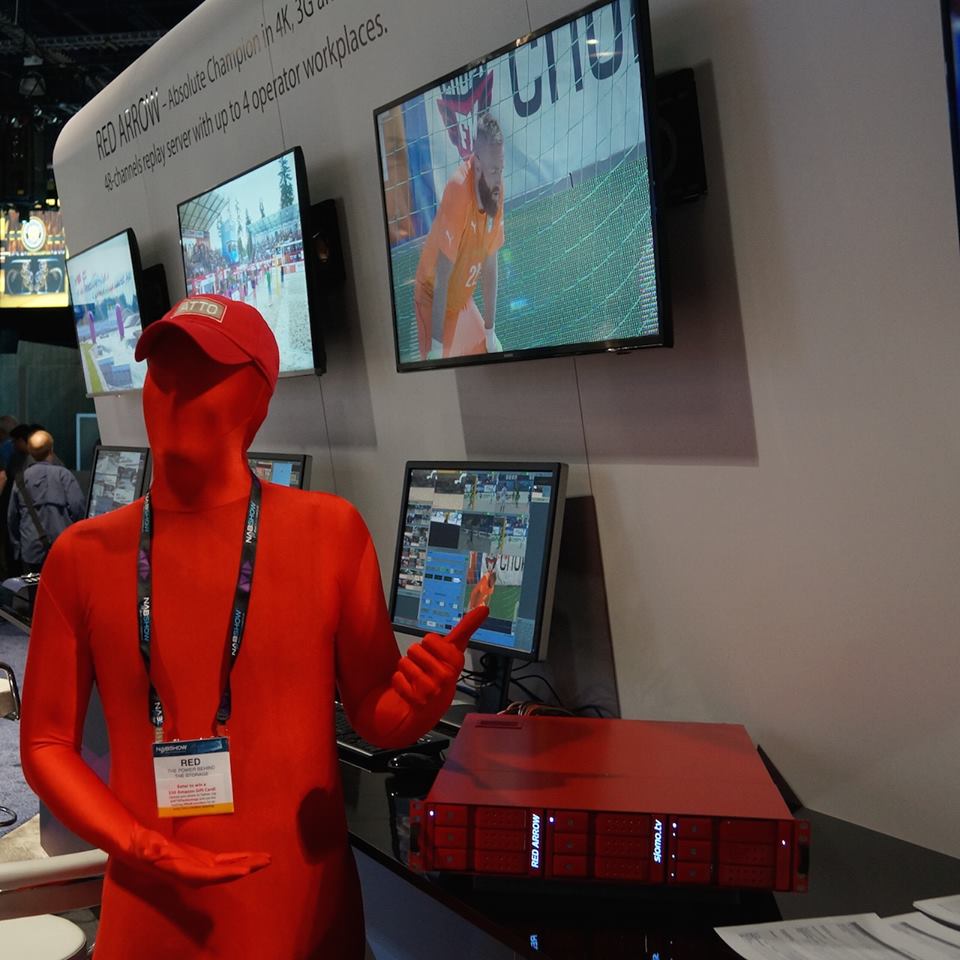
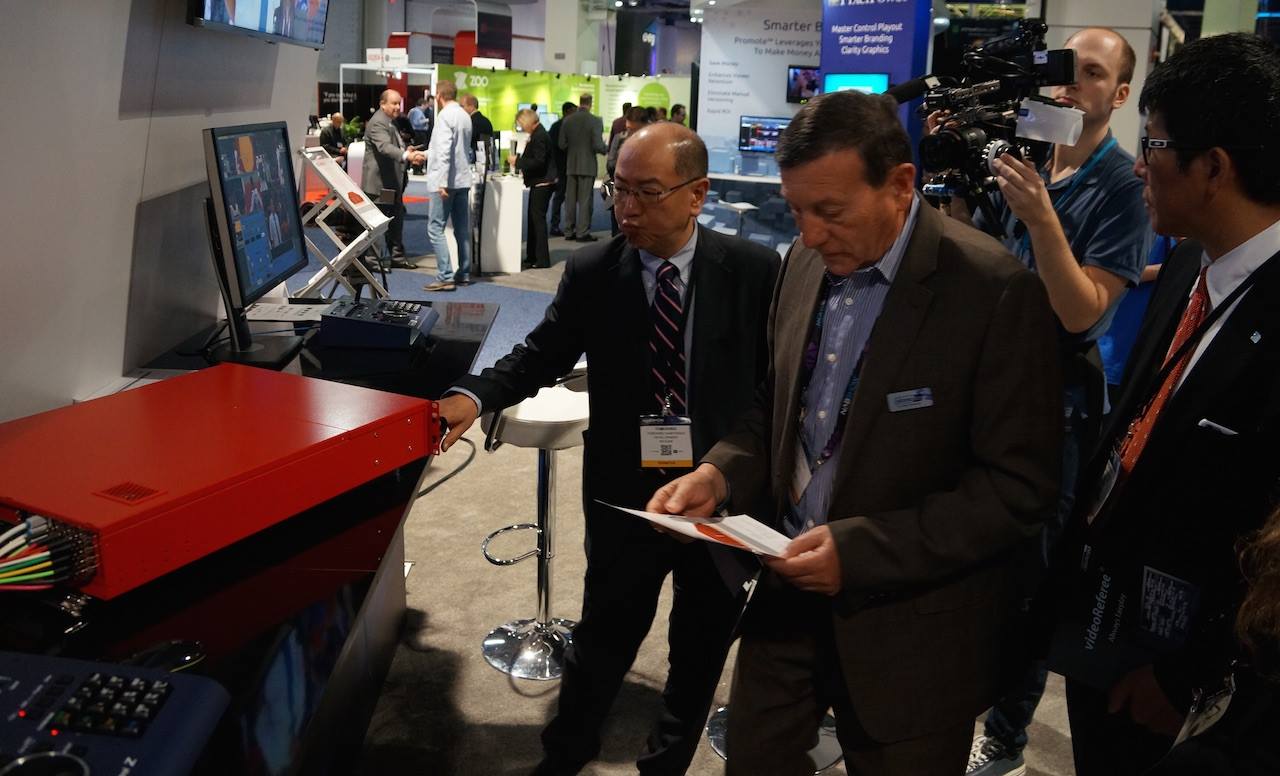
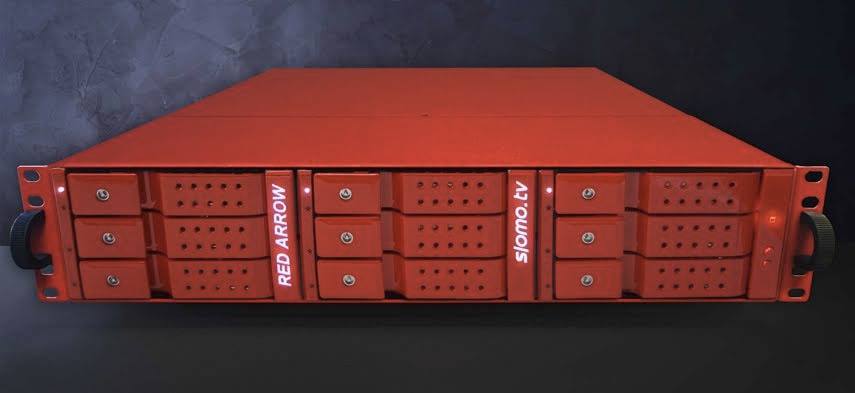
The world premiere of FULL 4K replay and slow-motion server by SLOMO.TV RED ARROW was at NAB Show in Las Vegas. With this new product the company once again sets new standards in slow-motion servers. RED ARROW offers 4 channels recording, 4 channels search and 2 channels playback with six 4K physical video ports – all in 4K 50p in a single 2RU enclosure.
It is the most powerful replay and slow-motion server in the world.
RED ARROW can also be used for 6-channel 4K 50p recording for non-linear editing.
Due to its 4 graphics ports RED ARROW allows 4 operators to work on one machine at the same time. For example, two operators work with configuration 662 (6 recording, 6 search and 2 replay channels), the other two with configuration 442 (4 recording, 4 search and 2 replay channels). While working simultaneously on one machine, each operator has its own display that can function as the main interface or in multiviewer mode.
The system interface has a built-in multiviewer that provides monitoring of input and output signals and search through 4 channels using one standard 1920x1080 monitor. Its SSD based array provides for storage of 266 hours 100 Mbit HD video. The built-in DMR™ SATA slots can accommodate nine (9) 3.5" SATA drives that can record 18 channels in ProRes 422 and 18 Proxy SD channels or 24 channels DVCPro HD with SD Proxy.
The RED ARROW can be operated as a stand-alone unit and, unlike others, does not need any additional s/w or hardware. In 3G or HD the RED ARROW can operate with 20 channels recording and replays, while providing 4 physical outputs!
In 3G/HD mode the server offers 20 channels of 3G. Unlike competing products, that offer maximum 4 channel recording + PRV and PGM typically in 6RU, RED ARROW is a true game changer in the field of high-end servers and offers functionalities never dreamed of before.
For integration with various production environments there are two 10 GbE interfaces.
- Details
To satisfy potential customers who want to have a professional broadcast class replays at a lower price we created a system which provides the same features as Simple R, but at a more affordable price. Arrow is a new family of products, which includes the Arrow 441, Arrow 442 and Arrow 662.
The main difference between Arrow and Simple R is the use of hard drives instead of SSD and slightly larger size - 2U instead of 1U for Simple R.
But there is a silver-lining:
- Advantage of using hard drives, is that it allows you to have a greater video storage capacity.
- By increasing the size of the chassis we were able to add a built-in DMR™ Trayless Toolless Rack for 3.5" SATA HDD, and now there is no need to connect an external USB drive for export of recorded material.
Especially for users with a limited budget, we have built into the server the ability to work with HDMI™ sources.
The system has two graphics port, which can be configured as:
- Main Interface
- MultiViewer or Game Analyzer.
The products of Arrow Series allow users to have practically all of the options available for servers Simple R.
To learn more about Arrow visit its product page on SLOMO.TV


- Details
The professional TV internet magazine "The broadcast bridge" published an article about us: "Video Judging for Basketball and Canoe Slalom".

- Details
On December 9, Broadcast Solutions GmbH held its highly publicized event in Bingen, Germany. The main theme of the day was video production in 4K.
The uniqueness of this event was that the participants were able to compare the work of 4K broadcast cameras shooting the same objects. The following 4K cameras participated in this "shoot-out": Grass Valley – LDX-86, Hitachi – SK-UHD4000, Ikegami – a prototype of a second generation 4K UNICAM camera and Sony – HDC-4300.
SLOMO.TV demonstrated two servers for working with 4K 50p: The company flagship – BlackJack 4K, and a completely new system – Arrow 4K.
For the entire Arrow product line with its distinguished short 2U chassis format this was a 2015 premiere. As a junior member of the company's 4K line, Arrow 4K possesses unique features unavailable in servers of other manufacturers. In particular, the server supports simultaneous recording of 2 channels 4K50p/4K60p, search on 2 channels and playback of 2 channels. Also it should be noted that Arrow 4K is the most affordable 4K replay server in the world.
The BlackJack 4K shown at the event is also a unique system. It supports 3 recording channels 4K, search on 3 channels and playback of 3 channels simultaneously.
All SLOMO.TV 4K servers have the following advantages:
- The use of a standard Full HD display for displaying the interface with built-in multiviewer. This eliminates the need of using several 4K / 4x3G SDI monitors.
- Support of all available transmission options: 4K50p/4K60p signals via 4 x 3G SDI – Quadrant transmission using 3G Level A / 3G Level B and SMPTE 425-3.
- The ability to create Quick Time ProRes full resolution files natively compatible with editing systems.
- SSD based subsystems, common to all SLOMO.TV servers.
- Ability to work in a network.